Best Digital Signage Software for Retail and Hospitality in 2026: Top Picks Compared
Generic digital signage platforms are built for office lobbies and conference rooms. Retail and hospitality operations need something different: menu boards that sync with a POS system, franchise approval workflows so a store manager in Ohio can’t overwrite the brand’s promo calendar, and dayparting rules that swap breakfast pricing for lunch pricing without anyone touching a screen. This guide compares the platforms that actually handle that job, with an honest look at where each one fits and where it doesn’t.
Quick verdict
If you run a multi-location retail or restaurant chain and need built-for-purpose templates plus franchise controls, start with NoviSign. If you’re a European SMB or a single-location operator without a dedicated AV team, TDM Signage is the easiest to run day to day. If POS-driven menu pricing is your core requirement, OptiSigns‘ OptiSync feature is the most direct route. If budget is the deciding factor and you only have a handful of screens, Yodeck gets you running for close to nothing. ScreenCloud is built for large enterprise chains with compliance requirements, not small operators.
Who this is for
- IT managers responsible for signage across multiple retail stores or restaurant locations
- Facilities or ops leads at hospitality groups evaluating a first signage rollout
- Franchise operators who need corporate content locked while allowing local promotions
- Single-location restaurant or retail owners comparing budget-friendly options
- Anyone replacing static menu boards or printed posters with screens tied to a POS system
What makes retail and hospitality signage different
Office digital signage mostly displays a calendar feed, a welcome message and some KPIs. Retail and hospitality signage has to do real operational work, and that changes which platform features actually matter.
POS and menu integration
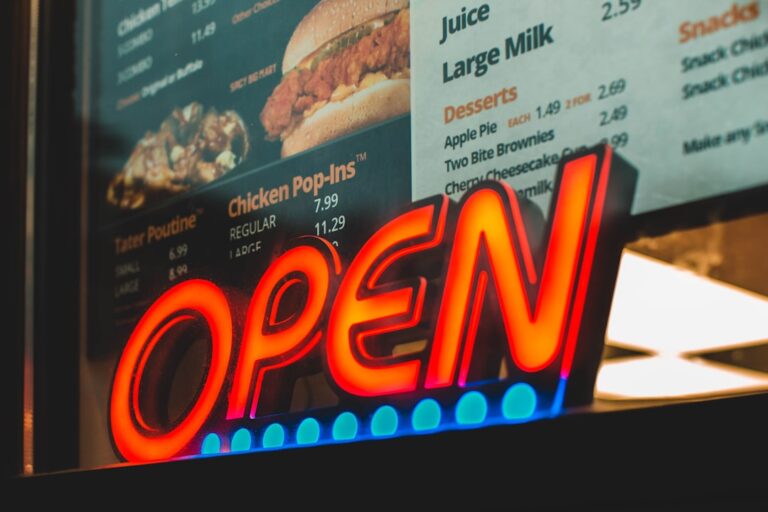
A restaurant menu board that doesn’t reflect a price change made at the register creates a legal and customer trust problem. Platforms built for this space offer direct or near-direct syncing with systems like Toast or Square, so a price update at the till updates the screen automatically instead of requiring someone to re-export a template.
Franchise and multi-location approval workflows
A chain with 40 locations cannot have 40 store managers independently deciding what goes on the screen. The better platforms in this category support role-based permissions, so head office can push mandatory brand content while giving local managers a limited, approved zone for their own promotions, in-store events or daily specials.
Dayparting
Breakfast menus, lunch specials and happy-hour pricing all need to appear and disappear automatically on a schedule. This is table stakes for hospitality signage software but rarely built out in general-purpose platforms aimed at office use.
Guest wifi and casting adjacency
In hospitality specifically, signage sits next to (and sometimes overlaps with) guest-facing wifi portals, room reservation displays and casting setups in lobbies or waiting areas. Platforms that already integrate with room-booking or reservation systems tend to slot into these environments with less custom work.
The contenders
NoviSign
NoviSign is built specifically around retail and hospitality use cases, with a template library aimed squarely at menu boards, in-store promotions and franchise content. If your primary use case is exactly what this article is about, rather than signage as a secondary IT project, NoviSign is worth shortlisting first. We’ve covered it in more depth in our NoviSign review.
TDM Signage
TDM Signage is a European cloud-based platform (TDM5) that’s a strong fit for small and mid-sized retail or hospitality operators, particularly those without a dedicated AV or IT specialist on staff. The content creator uses drag-and-drop templates, and Mail-to-Signage lets non-technical staff push content to a screen just by sending an email, which matters when the person updating a menu board is a shift manager, not an IT admin. For hospitality specifically, TDM Signage supports guest-room reservation display integration, menu board and price-list templates, and touch-screen product catalogs, all confirmed features on the vendor’s site. It also connects to room-booking systems including Office 365, Exchange, Google Calendar and Amadeus, useful in hotel lobbies running both wayfinding and meeting-space displays.
Pricing runs across three tiers. The Essential tier covers content creation, scheduling and Dropbox/OneDrive storage on Android players only. Small Business adds custom data sources, custom fonts, Mail-to-Signage and Windows player support. Enterprise unlocks the full TDM5 feature set and is confirmed at roughly EUR 25/month, with future feature releases included automatically. check tdmsignage.com for current Essential and Small Business tier pricing, since only the Enterprise rate above is confirmed. There’s a 30-day free trial with two demo licenses and no credit card required. For a full breakdown, see our TDM Signage review.
OptiSigns
OptiSigns leans on breadth, with 160+ app integrations and over 4,000 templates, plus AI content generation for building layouts quickly. The feature most relevant to this category is OptiSync, available on the Pro Plus tier (pricing starts from around $13.50/screen/month, check OptiSigns’ pricing page for current rates), which syncs menu and price data directly from Toast or Square POS systems onto the screen. That’s a genuinely useful shortcut for restaurants and quick-service operators who don’t want to maintain menu content by hand. Lower tiers start from around $9/screen/month for operators who don’t need POS syncing.
Yodeck
Yodeck is the budget pick, with a free tier for a single screen and paid tiers running from around $8 up to $16/screen/month across Basic, Premium and Enterprise plans. Annual plans include a free Raspberry Pi player, which lowers hardware cost for a small chain rolling out its first few screens. It doesn’t have the retail-specific depth of NoviSign or the POS sync of OptiSigns, but for a single restaurant or small retail operation watching every dollar, it has the best price-to-feature ratio in this list.
ScreenCloud
ScreenCloud is the enterprise option here, with pricing from around $20/screen/month on the Core annual plan. It supports Power BI and Salesforce integration, SOC 2 compliance and SSO, along with 24/5 phone support. That combination matters for a large multi-site retail or hospitality chain with a security and compliance checklist to satisfy, but it’s more platform than a five-location operator typically needs, and the price reflects that.
Rise Vision
Rise Vision is a well-known name in digital signage, historically strongest in education and corporate communications rather than retail or hospitality specifically, so check its current pricing and feature set directly before assuming it matches NoviSign or OptiSigns on retail-specific depth. Worth a look if you already use it elsewhere in the organization, but it’s not the first platform we’d point a retail or restaurant IT lead toward on vertical fit alone.
Comparison table
| Platform | Best for | Starting price | Notable feature |
|---|---|---|---|
| NoviSign | Franchise and multi-location retail/hospitality | Check vendor pricing page | Retail and hospitality-specific template library |
| TDM Signage | European SMB retail/hospitality, small IT teams | Enterprise tier around EUR 25/month; other tiers vary, check tdmsignage.com/pricing | Mail-to-Signage, room-booking and reservation integrations |
| OptiSigns | Restaurants needing direct POS sync | From around $9/screen/month ($13.50 for OptiSync tier) | OptiSync menu sync with Toast/Square |
| Yodeck | Budget-conscious small retail/hospitality | Free for 1 screen; paid from around $8/screen/month | Free Raspberry Pi player on annual plans |
| ScreenCloud | Large multi-site enterprise chains | From around $20/screen/month (annual) | SOC 2, SSO, Power BI/Salesforce integration |
| Rise Vision | Organizations already standardized on it | Check vendor pricing page | Retail/hospitality-specific features not independently confirmed |
For context on what operators are actually paying, the 2026 State of Digital Signage survey of 515 operators found most budget somewhere between $11 and $20/screen/month industry-wide. The global digital signage market itself is estimated at roughly $33-35 billion in 2026, up from about $31-32 billion in 2025, so this isn’t a shrinking category to bet on.
Does the ROI actually hold up?
Before committing budget, it’s fair to ask whether screens outperform printed menu boards and posters. A Nielsen on-premise study found that featured items promoted via digital signage saw roughly a 32% average lift in unit sales, with AI-driven dynamic content adding a further 22% conversion uplift on top of that. Treat those as directional industry figures rather than a guarantee for any specific store, but they line up with the basic logic of dayparted, always-current pricing versus a static laminated menu that’s three price changes out of date.
Bottom line
There’s no single winner here, because retail and hospitality signage buyers aren’t a single audience. A franchise chain with 50 locations, a single independent restaurant, and a European boutique retailer with two stores have genuinely different requirements, and the platform that’s right for one is overkill or underpowered for another.
If you want built-for-purpose retail and hospitality templates out of the box, start with NoviSign. If you’re a small or mid-sized operator, especially in Europe, without a dedicated AV team, TDM Signage’s straightforward CMS and Mail-to-Signage feature make day-to-day content updates genuinely simple for non-technical staff. If POS-tied menu pricing is your main pain point, OptiSigns’ OptiSync is worth testing directly against your POS vendor. Whichever you pick, run a real trial with your actual menu, promo or wayfinding content before signing an annual contract, not just a vendor demo.
For a broader look at signage strategy across a chain, see our guide to digital signage for retail chains and our practical IT guide to restaurant digital signage. If you’re starting from scratch, our digital signage buyer’s guide covers the fundamentals before you narrow down to a vertical-specific platform.