Crestron vs Q-SYS (2026): AV Control and Audio Platforms Compared for Corporate Meeting Rooms
If you are standardising meeting rooms across a corporate estate, the shortlist often comes down to Crestron and Q-SYS. Both can run a boardroom, both support Microsoft Teams Rooms and Zoom Rooms, and both offer cloud management. But they come from opposite directions. Crestron built its name on control. Q-SYS grew out of audio processing into a software-based audio, video and control platform.
That difference decides who programs your rooms, what you pay for, how audio is handled and how you support 50 rooms after go-live. This comparison draws on vendor documentation and typical deployment patterns.

Quick verdict
- Choose Q-SYS if audio, DSP and echo cancellation are the hardest part of your rooms, you want one software platform for audio, video and control, and you want your own staff to learn the design tool for free.
- Choose Crestron if your rooms must control a wide mix of third-party devices (lighting, shades, HVAC, legacy AV), or you already have an established Crestron integrator.
- Use both where it makes sense. Many large rooms pair a Crestron control processor with a Q-SYS Core handling audio. That is a legitimate design, not a compromise.
For standard meeting rooms, either platform will do the job. The deciding factors are your integrator’s strengths, your audio requirements and how much custom programming you are willing to own long term.
Who this is for
IT managers, AV managers and workplace technology leads who are writing a meeting room standard, comparing integrator proposals where one quotes Crestron and the other Q-SYS, or trying to reduce dependency on a single programmer.
If you are still deciding whether you need a dedicated control system at all, start with our AV control systems buyer’s guide. If Crestron is up against AMX or Extron instead, see Crestron vs AMX vs Extron.
Crestron vs Q-SYS at a glance
| Factor | Crestron | Q-SYS |
|---|---|---|
| Heritage | Control and automation | Audio DSP, now audio, video and control |
| Architecture | 4-Series control processors, plus server-based Virtual Control | Software-based Q-SYS OS running on Core processors |
| Audio / DSP | DM NAX Intelligent Audio, Avia DSP; often paired with third-party DSP | Core strength: AEC, automixing, large networked audio designs |
| Programming | SIMPL Windows, SIMPL# Pro / C#; .AV Framework for configuration-based rooms | Q-SYS Designer, Lua scripting, Block Controller; RoomSuite for no-programming rooms |
| UI design | Crestron Construct and CH5 (HTML5) | UCI editor inside Q-SYS Designer |
| Cloud management | XiO Cloud (free tier; Premium licensed per device) | Q-SYS Reflect (monitoring included; Reflect Plus priced per Q-SYS system) |
| Teams / Zoom Rooms | Crestron Flex and Collab Compute room systems | Certified Cores, cameras, mics and VisionSuite; Q-SYS Connect |
| Third-party control | Very broad, including building systems | Growing plugin ecosystem, strongest for AV devices |
| Software and training | Through the dealer channel | Designer and Level One training free |
| Licensing | Mostly hardware-centric | Hardware plus feature and scaling licenses |
Architecture: hardware control vs a software platform
Crestron commercial control is built around 4-Series control processors, which according to Crestron run C# programs alongside its SIMPL and SIMPL# Pro tools. Crestron Virtual Control (VC-4) can run room programs on a server instead of a processor per room. Around that sits a large hardware ecosystem: touch screens, DM NVX AV-over-IP, AirMedia wireless presentation, 1 Beyond cameras and UC room systems. A Crestron room is essentially a set of purpose-built devices coordinated by a control program.
Q-SYS is software-first. Audio, video and control all run on the Q-SYS OS, hosted on a Core processor. The lineup runs from compact units such as the Core Nano and Core 8 Flex up to processors like the Core 24f, and the NV-32-H video endpoint can act as a Core itself in smaller rooms. Q-SYS has also expanded its network video range with NVM Series endpoints; check qsys.com for current availability in your region. One design file in Q-SYS Designer describes the room’s audio, video routing, control logic and user interface, which suits IT teams who think in software and networks.
A corporate note: QSC, the company behind Q-SYS, was acquired by Acuity Brands (now Acuity Inc.) at the start of 2025, and Q-SYS continues as the product brand. If vendor roadmap matters to your procurement team, ask your Q-SYS rep how the ownership change affects support and product plans.
Audio and DSP: where Q-SYS has the edge
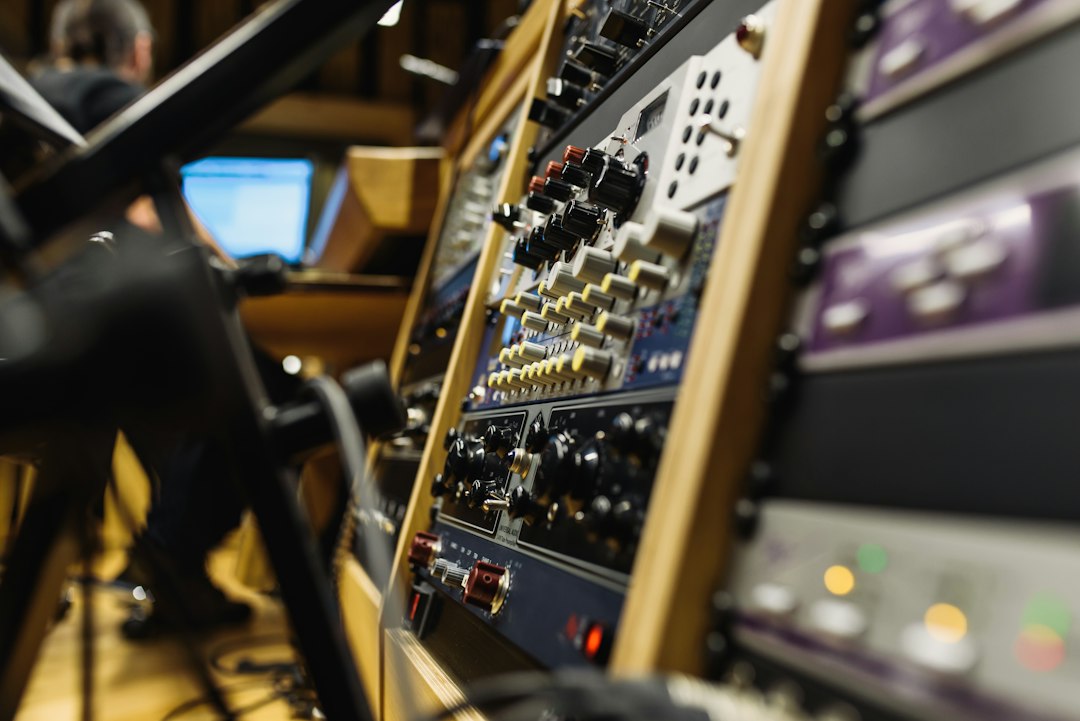
Q-SYS comes from DSP. Echo cancellation, automatic mixing, gain structure and large networked audio designs are what it was built for, and scaling licenses can add network channels and DSP capacity on supported Cores. For divisible spaces, large boardrooms with ceiling microphones or rooms that also feed a PA, Q-SYS is often the natural choice.
Crestron is not standing still. Its DM NAX Intelligent Audio system pairs an audio processor with table pods or certified ceiling microphones, and Crestron positions it as plug-and-play with Teams certification. Its Avia DSP line covers more traditional projects. Even so, many integrators still pair Crestron control with a third-party DSP for complex audio, which is why the Crestron-plus-Q-SYS design is so common.
Q-SYS control vs Crestron control and touch panels
Control is where Crestron built its reputation. Its programs can drive almost any device with a serial, IR, relay or IP interface, and reach beyond AV into lighting, shades and building systems. If a boardroom needs to dim lights, lower blinds and change HVAC modes from one panel, Crestron fits well. In 2026 it added the 80 Series touch screens for scheduling, UC and room control, and interfaces are built with Crestron Construct, a drag-and-drop HTML5 editor, or CH5 for developers.
Q-SYS control has matured considerably. Third-party devices are integrated through plugins distributed via the Q-SYS Designer Asset Manager, and custom logic is written in Lua or built visually with the Block Controller. User control interfaces (UCIs) are designed in Q-SYS Designer and deployed to Q-SYS touch screens. For AV-centric rooms that covers most needs. For deep building integration, confirm reliable plugins exist for your specific devices before committing.
Programming and integrator dependency
This section matters most to IT managers, because it decides who you depend on for every future change.
Crestron
Custom Crestron programming is specialist work. Crestron’s own documentation says its SIMPL Windows programmer certification path can take one to two years, and software access runs through its dealer and service provider programmes. Most organisations therefore depend on an integrator for program changes. For standard rooms, Crestron’s .AV Framework is a web-based tool for deploying enterprise rooms without programming. If you are rolling out dozens of identical rooms, push your integrator to use it.
Q-SYS
Q-SYS Designer is free to download, and Q-SYS Level One training is free online with no prerequisites. That makes it realistic for an in-house AV or IT person to read, adjust and troubleshoot designs. Complex systems still need a qualified integrator, but routine changes are more accessible. For simple rooms, Q-SYS RoomSuite systems are positioned as needing no programming.
Whichever you choose, put source-file ownership in the contract. Our Crestron AV control system cost guide explains how programming labour often rivals hardware cost, and the same applies to Q-SYS.
Enterprise management: XiO Cloud vs Q-SYS Reflect
Crestron XiO Cloud has a free tier covering remote deployment, device management and alerts for unlimited rooms and Crestron devices. XiO Cloud Premium adds monitoring of select third-party devices, room-level views, analytics and REST API access, licensed per device with an annual true-up.
Q-SYS Reflect includes cloud health monitoring and alerts as part of the platform. Reflect Plus adds remote management, including remote UCI access, configuration changes, firmware deployment and an API for tools like ServiceNow or Splunk. Q-SYS prices Reflect Plus by the number of Q-SYS systems rather than connected devices.
That difference matters at scale. Device-based pricing grows with every panel and camera; system-based pricing grows with room count. Model both against your real inventory and confirm current terms with each vendor.
Crestron Flex vs Q-SYS for Teams Rooms and Zoom Rooms
Crestron sells complete UC room systems. Crestron Flex has long offered native Teams Rooms and Zoom Rooms variants, and the newer Collab Compute platform supports both and is managed through XiO Cloud. 1 Beyond cameras and Automate VX multi-camera speaker tracking add intelligent video.
Q-SYS focuses on the room around the UC compute. It lists Teams-certified Cores, cameras and microphones, and its VisionSuite VSA-100 AI accelerator gained Teams certification in February 2026 and Zoom Rooms certification in September 2026. Q-SYS Connect integrates Q-SYS room control with Teams Rooms on Windows and lets supported Q-SYS touch screens act as Zoom Rooms controllers. The RoomSuite Collaboration Bar includes built-in Teams Rooms compute for smaller spaces.
In short, Crestron Flex vs Q-SYS is often a choice between an integrated room kit and a platform that wraps your chosen UC compute.
Cost model: hardware-centric vs hardware plus licenses
Neither vendor publishes a simple price list for corporate rooms. Pricing runs through authorised dealers and integrators, and labour is a major share of every project.
- Crestron is largely hardware-centric: processors, panels and endpoints plus programming labour, with XiO Cloud Premium as an optional recurring cost.
- Q-SYS combines hardware with software licenses. Since Q-SYS 10.0, scripting and UCI deployment no longer need separate licenses on supported Cores, but features such as software Dante channels and scaling licenses are still licensed. Ask for every license to be itemised, and which are perpetual versus subscription.
As a broad industry rule of thumb rather than vendor pricing, a standardised small or medium room with professional control and audio often lands in the low-to-mid five figures in USD once hardware, installation and programming are included. Boardrooms and divisible spaces can go well beyond that. Get itemised quotes from at least two integrators, and use our guide on how to design a conference room AV system to scope rooms consistently first.
AV control system comparison by scenario
50+ standard meeting rooms
Either works. Favour configuration over custom code: Crestron .AV Framework or Q-SYS RoomSuite and templated designs. Compare XiO Cloud Premium and Reflect Plus costs across your full room count.
Boardroom with ceiling mics and demanding audio
Q-SYS is usually the stronger fit. If the room also needs lighting and shade control, pair a Crestron processor with a Q-SYS Core for DSP.
Executive floor with building integration
Crestron. Control breadth beyond AV is the main reason to choose it.
You want in-house staff to make routine changes
Q-SYS, thanks to free design software and free entry-level training.
If Extron is also in the running, see Crestron vs Extron and AMX vs Extron.
FAQ
Is Q-SYS better than Crestron?
Not across the board. Q-SYS is generally stronger for audio processing and offers an all-in-one software platform. Crestron is stronger for broad third-party and building control.
Can Crestron and Q-SYS work together?
Yes, and it is a common design. A Crestron processor handles control and the user interface while a Q-SYS Core handles DSP, connected over the network.
Do you need a license for Q-SYS scripting?
According to Q-SYS, Cores running software 10.0 or later can use scripting and UCI deployment without separate licenses. Other features may still require licenses, so check current Q-SYS licensing documentation for your Core.
Is XiO Cloud free?
There is a free tier for Crestron devices. Third-party device monitoring, analytics and API access require XiO Cloud Premium, licensed per device.
Bottom line
The Crestron vs Q-SYS decision is about where your rooms are hard. If the hard part is audio, or you want a platform your team can learn for free, start with Q-SYS. If the hard part is controlling a wide mix of devices and building systems, Crestron remains the safer bet.
Pick based on the rooms you build most often, standardise on configuration-based deployments wherever possible, and require source files and itemised licensing in every quote. For rooms that need both strengths, specify Crestron control with Q-SYS audio. Confirm current product availability, licensing terms and pricing with an authorised dealer before you commit.